Churn Prevention
- Data, Strategy, Systems
Churn Prevention refers to proactive processes put in place to minimise customer attrition - the loss of customers. Existing customers are often the most valuable asset an organisation possesses and their retention is of paramount importance, not only to protect current revenue but also to preserve a foundation for future growth. Establishing effective Churn Prevention processes is consequently key to long-term business success.
There is no set structure for Churn Prevention processes, their specifics depend on the organisation, its environment and its customers. There are however some fundamental parts of
all effective Churn Prevention processes:
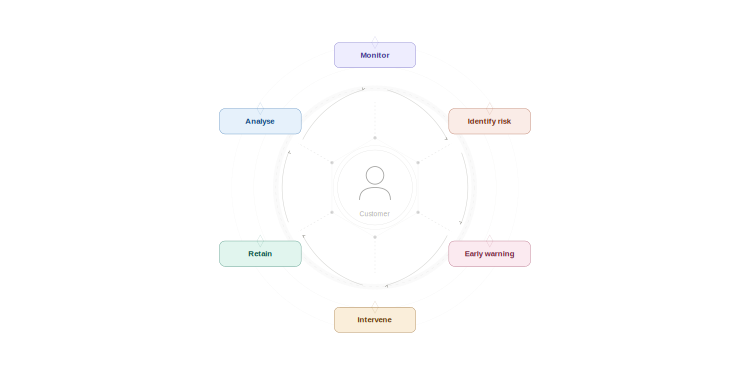
- Analysis: Using industry knowledge together with analytical techniques, identify customer behaviour changes that indicate risk of loss
- Monitoring: Develop reports/dashboards highlighting the identified risk behaviours, regularly update and monitor these to flag as early as possible customers at risk of leaving
- Intervention: Apply pre-determined steps to address this risk - these largely involve customer contact made to improve their experience and address concerns
- Evaluate: For both lost and retained customers use analytical techniques to understand their behaviour changes and how we can use this to mitigate future loss of business
All parts of the Churn Prevention process can be enhanced with Customer Profiling & Machine Learning. These can be used to define customer groups/segments, with monitoring and intervention then tailored to the specific characteristics and attitudes of these groups, and can also be used to accurately predict customer behaviour. Improved customer service and attentiveness is generally the key factor in retaining customers who are at risk of becoming lost, advanced analytics techniques can also help here by providing detailed insight into customers which agents can use to guide their interactions and offers.